Translating Okwui Enwezor’s seminal 2002 exhibition The Short Century into a fellowship programme
From June to November 2025, The Short Century Intensive jointly presented by Guest Artists Space (G.A.S.) Foundation and Yinka Shonibare Foundation (Y.S.F.) brought together U.S. fellows Pujan Karambeigi, Miatta Kawinzi, sadé powell, Cosmo Whyte, and Najha Zigbi-Johnson to explore the compressed 20th century as a formative, in-between space. Across artistic registers, they engaged with archives, excavated overlooked genealogies, and rehearsed speculative modes of citation and annotation, tracing new networks, collaborations, and Afro-diasporic relations. The intensive reimagined and activated Okwui Enwezor’s 2001–2002 exhibition The Short Century: Independence and Liberation Movements in Africa, 1945–1994, raising key questions: What becomes possible when African political and aesthetic thought is taken on its own terms—not as an extension, supplement, or proxy? And how might new forms of relation across geographies arise from a shared commitment to difference, rather than a desire to collapse it?
With support from the Terra Foundation for American Art, the programme expanded the boundaries of what can be understood as American Art, culminating in an encounter with archival materials from The Short Century exhibition, preserved at the MoMA Archives in New York City.
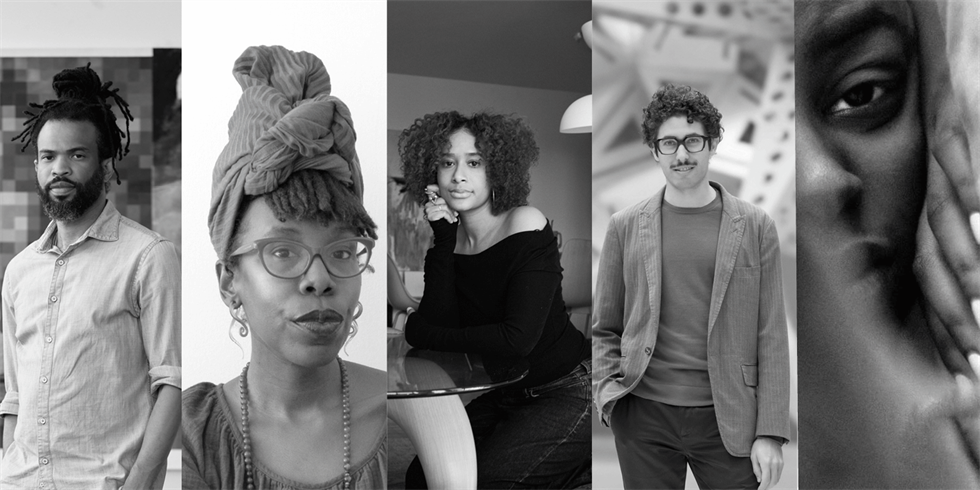 (L-R) Cosmo Whyte, Miatta Kawinzi, Najha Zigbi-Johnson, Pujan Karambeigi and sadé powell
Revisiting the fellows’ intentions for participating in The Short Century Intensive through their proposals—and specifically their interest in its location in Nigeria—revealed why this context was critical at this moment in their practices. Across the proposals, we observed a shared recognition that working in Nigeria offered a grounded opportunity for engaging African independence and liberation histories at their sites of articulation, while situating U.S. Black political, cultural, and artistic movements as entangled with, rather than adjacent to, postcolonial African histories. For the fellows, being in Nigeria enabled forms of collective study, embodied archival encounter, and reciprocal exchange. The intensive thus provided a necessary space to read with and against archives, activate silences, and develop collaborative, speculative methodologies rooted in place, relation, and dialogue.
Reading with the short century
Between July and October 2025, the fellows participated in three virtual intensives ahead of the Lagos week intensive. These sessions brought together invited guest speakers whose expertise guided discussion and research, offering multiple ways to engage with archives, histories, and Afro-diasporic relations. Jonn Gale, ethnobotanist and Re:assemblages PhD placement researcher, introduced the concept of ecotones, exploring gardens as living archives and transitional spaces where knowledge is embodied and relational. Dr. Moses März, researcher and mapmaker, shared experimental cartographic approaches, emphasizing fluid, relational mappings that connect transnational solidarities, historical conjunctions, and counter-archival practices. Filmmaker Jihan El-Tahri presented Complexifying Restitution, situating archival control, colonial legal frameworks, and African visual production in conversation with the Short Century, inviting fellows to critically examine the politics of archival knowledge.
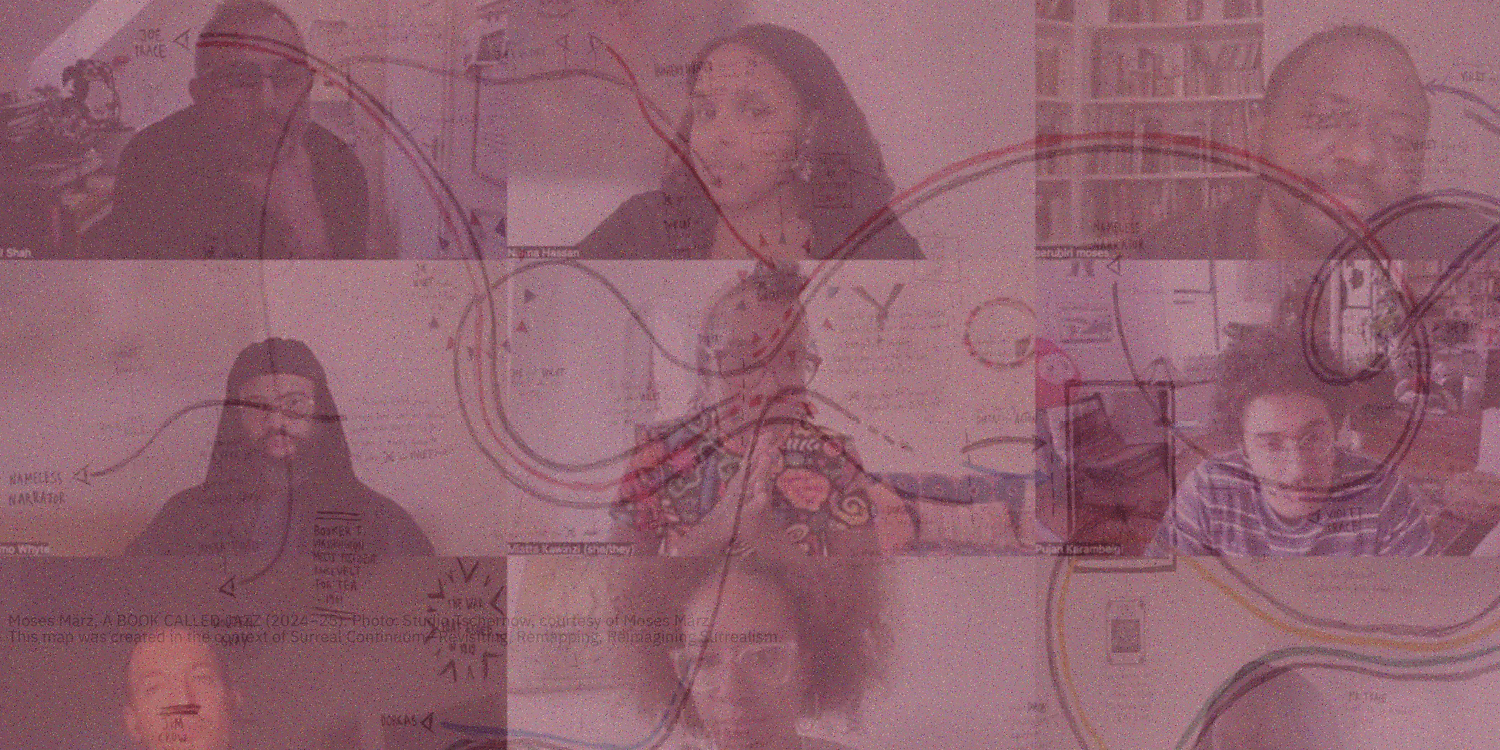 Virtual intensive superimposed into Moses März map from A BOOK CALLED JAZZ (2024–25).This map was created in the context of Surreal Continuum—Revisiting, Remapping, Reimagining Surrealism.
Re:assemblages Symposium
At the Re:assemblages Symposium in Lagos (Nov 4–5, 2025), fellows of The Short Century Intensive presented the following participatory workshops and performances. Collectively, their contributions expanded upon the curatorial and archival questions posed by Okwui Enwezor’s The Short Century, foregrounding embodiment, pedagogy, and world-building as critical archival methods. Miatta Kawinzi’s ongoing reaching for freedom drew on Liberia’s 1847 independence and its symbolic afterlives across pan-African liberation movements, incorporating Augusto Boal’s Theatre of the Oppressed to explore freedom, power, and memory through movement and sound.
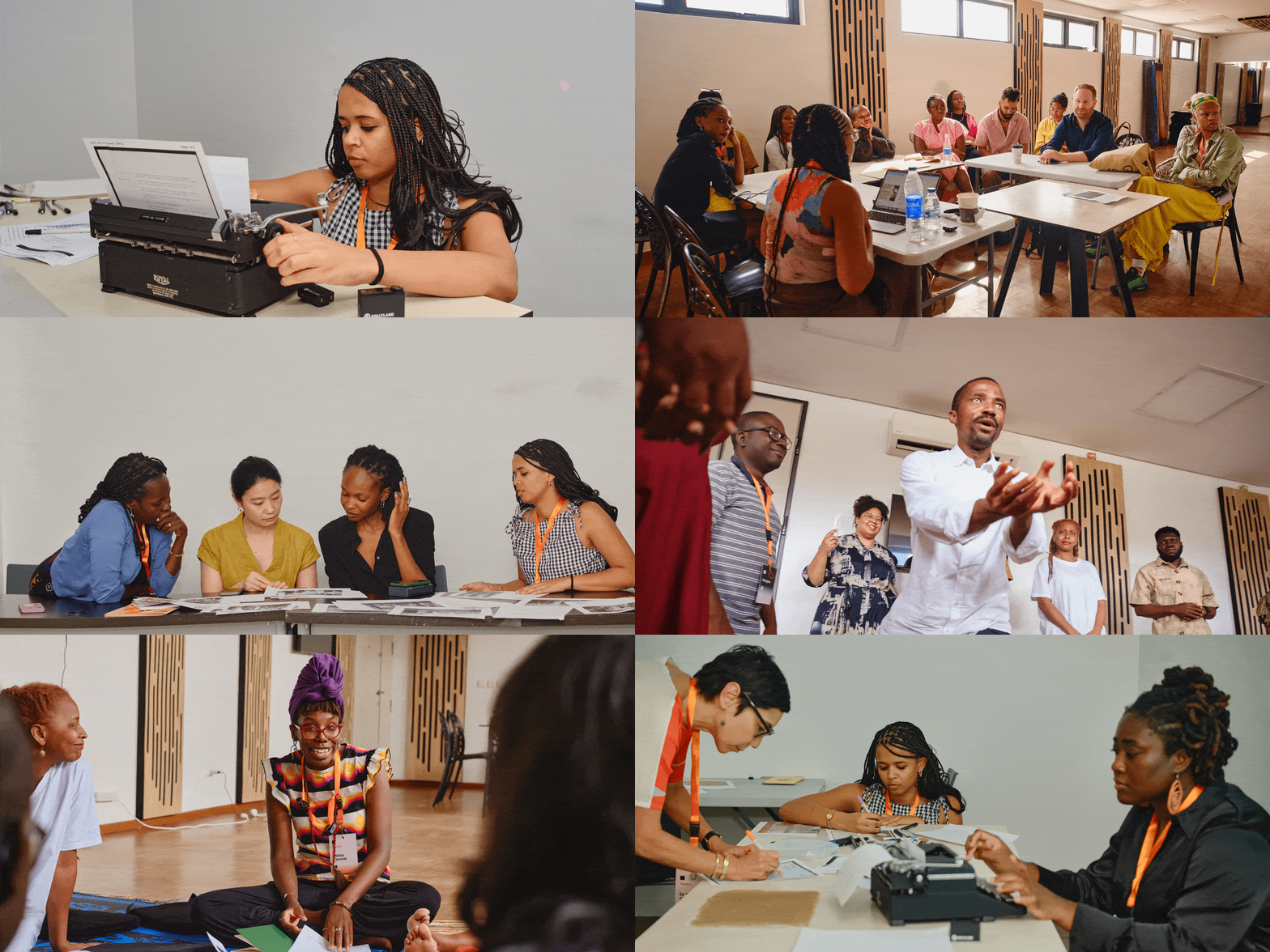 Impressions from workshops hosted by The Short Century Fellows during the Re:assemblages Symposium, 2025.
Pujan Karambeigi’s Inside the Postcolonial Archive critically revisited Enwezor’s archival ambitions by examining post-independence African art through institutional histories, drawing on materials from Africa, Europe, and the United States to address artists, art education, exhibitions, and museums. Najha Zigbi-Johnson’s Mapping Malcolm traced the political and aesthetic legacy of Malcolm X and the Black Arts Movement in Harlem, connecting figures and sites such as FESTAC ’77, the Mbari Clubs, Wole Soyinka, and Léopold Sédar Senghor to broader pan-African cultural imaginaries. sadé powell’s unentitled [shortcenturybody] approached the archive through Black feminist poethics, referencing Okwui Enwezor, diasporic political speech, and experimental print traditions to create a collective, improvised living archive shaped by erasure, sound, and gesture.
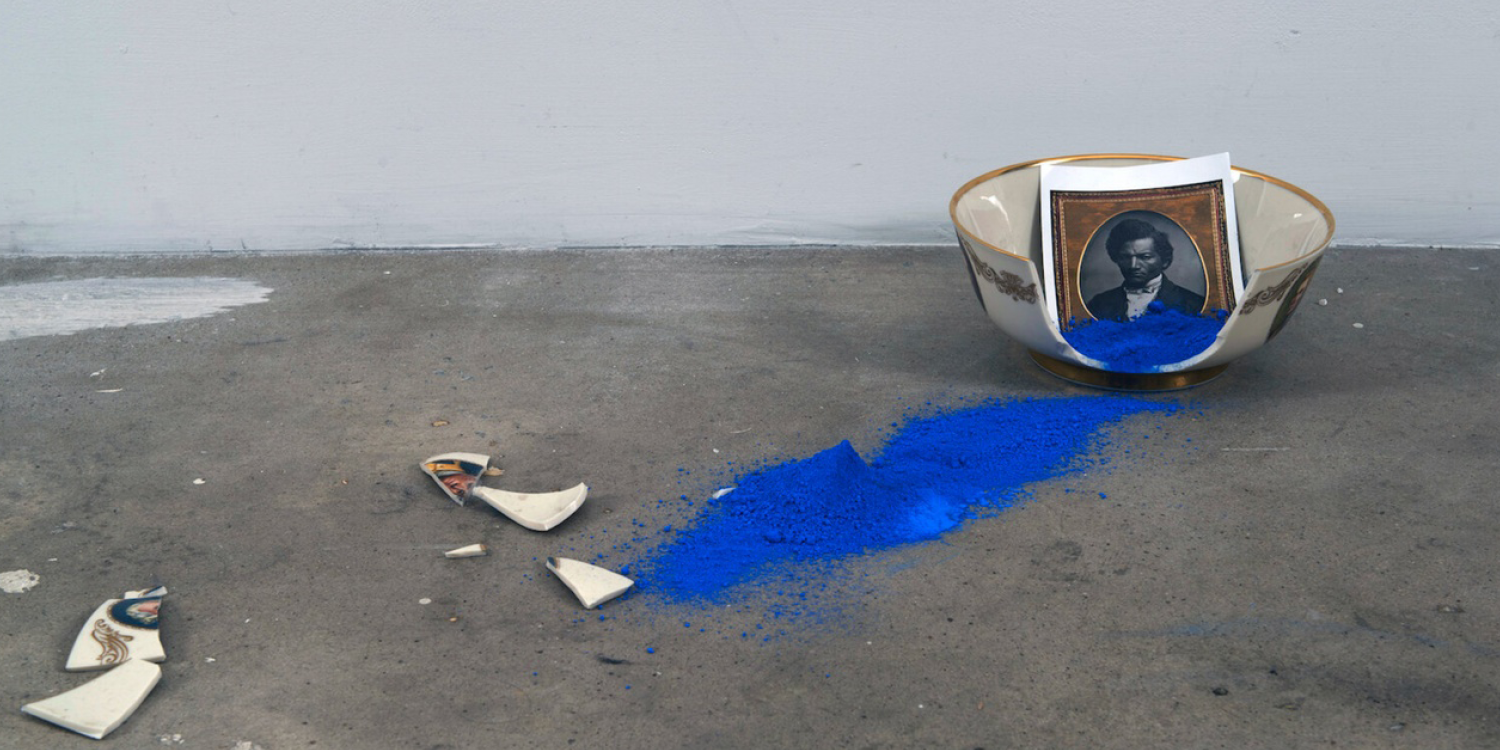 Cosmo Whyte, The Enigma of Arrival in 4 Sections / Section 2: Red, Green, Blue and Black (detail), 2017.
Following Hurricane Melissa, which made landfall in Jamaica in October 2025, Cosmo Whyte was unable to participate in the Lagos component of the fellowship and, as a result, could not realize his proposed contribution. Though unrealized, we are pleased to present his fellowship proposal as a gesture towards what remains unfinished in research on the short century.
For the Re:assemblages symposium, Cosmo Whyte proposed lecture performance and listening session RASTA-MAN and HIS BELOVED: Afrotropes, Empire, and the Sonic Archive with collaborator Timnet Gedar. Rooted in their shared commitment to the archive, this offering presents an ongoing research project that traces symbolic and sonic connections between Post-Independence Jamaica and the Post-Independence Horn of Africa. Drawing on Stuart Hall’s foundational text “Constituting an Archive” and the dialogue “Afrotropes: A Conversation with Huey Copeland and Krista Thompson” the lecture aimed to examine both the utility and contradictions of Ethiopian Empire’s symbolic status as a Pan-African emblem of diasporic liberation and the concept of afrotropes—a term coined by art historian Dr. Krista Thompson to describe recurring symbolic forms in Black diasporic visual culture.
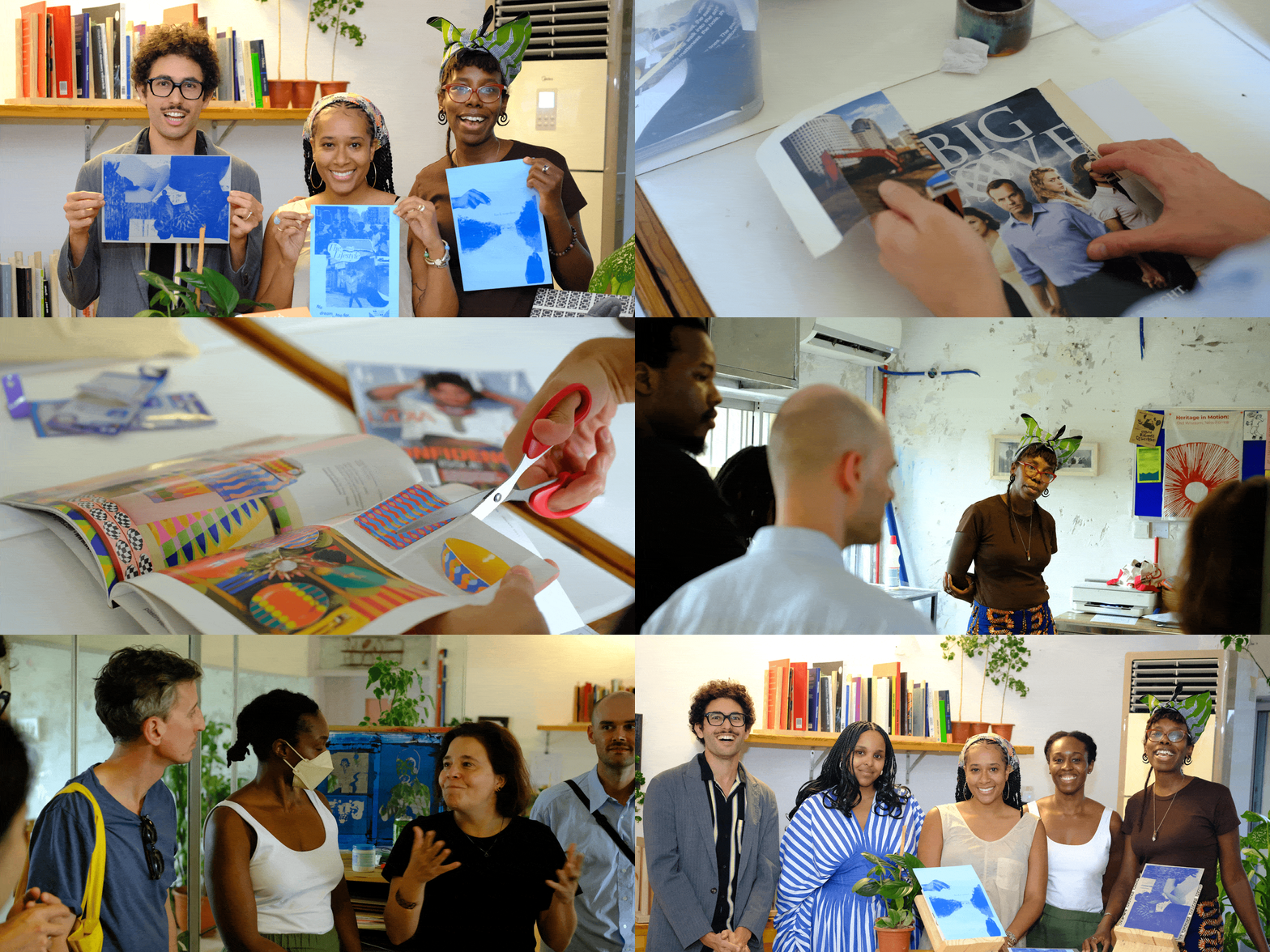 16/16 Print Studio (Iwalewabooks) workshop. Courtesy of 16/16 and Daniel Uwaga.
Lagos Chapter
Following the Re:assemblages Symposium, the fellows spent a week in Lagos engaging deeply with the city’s archives, cultural institutions, and artistic networks, grounding their research and creative practice in local contexts. The week began with Groundings on 6th November, a reflective day to slow down, consolidate insights, and imagine next steps for the Short Century chapbook. Fellows visited CBAAC and the FESTAC ’77 collections, encountering Lagos-specific archives of pan-African artistic and political imagination. At 16/16 Print Studio (Iwalewabooks), fellows participated in a hands-on collage and risograph workshop with Dubem Nwabufo allowing them to trace, layer, and recombine archival materials. The week also included a tour of the National Arts Theatre with Sandra Mbanefo Obiago, the seminal venue for the 1977 Second World Black and African Festival of Arts and Culture, and a visit to CCA Lagos with Oyindamola Faithful, connecting contemporary exhibitions to historical and post-independence contexts. Across these activities, fellows advanced the fellowship’s aims: to to situate African and Afro-diasporic histories within both local and transnational frames.
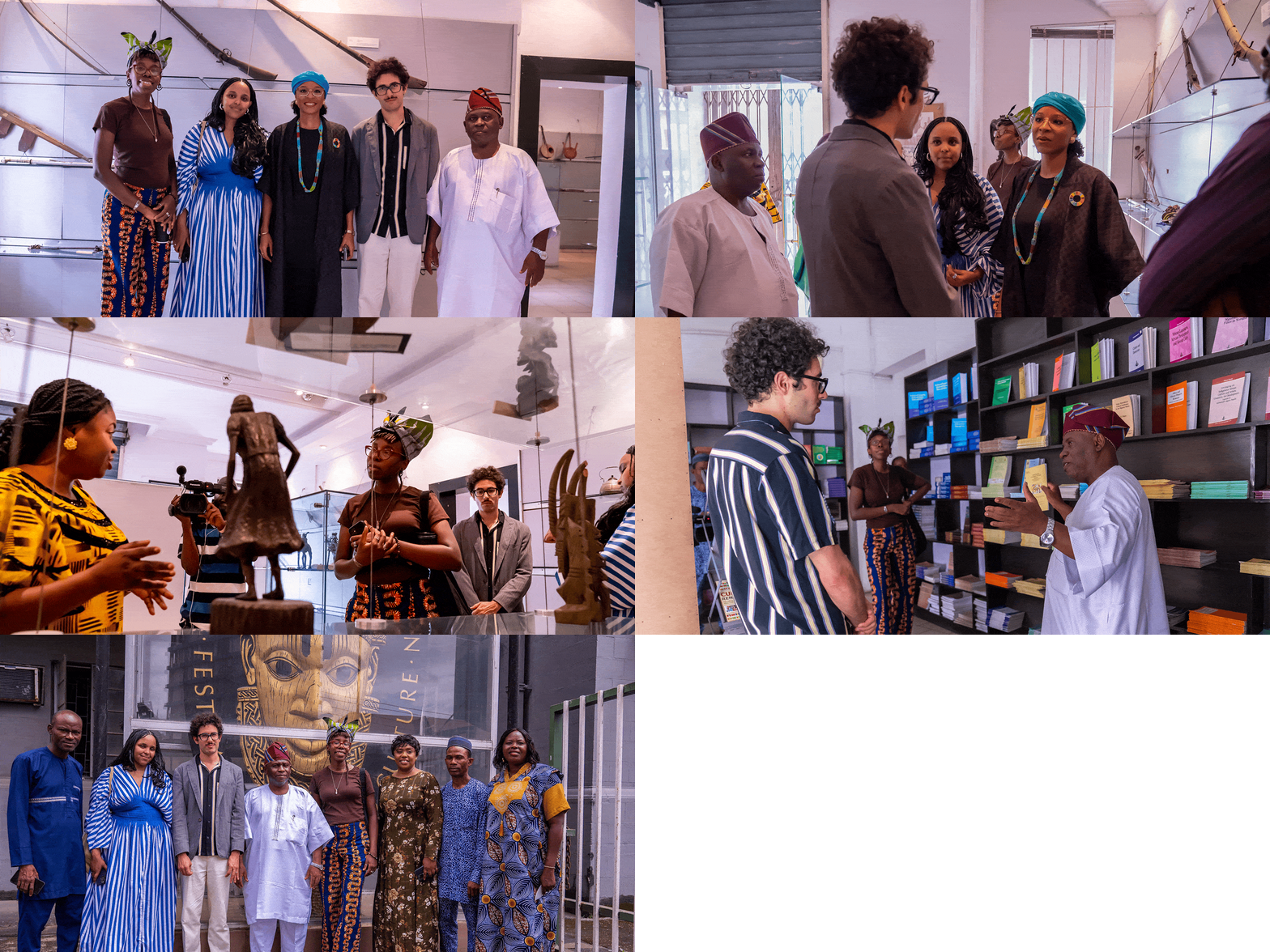 Visit to CBAAC and the FESTAC ’77 collections. Image courtesy of Kelly Katvil.
Encountering The Short Century at MoMA
On Tuesday, December 16, our Short Century Intensive group had the opportunity to explore the MoMA Archives in New York City. The visit held at The Museum of Modern Art Archives, offered an in-depth encounter with materials related to The Short Century: Independence and Liberation Movements in Africa, 1945–1994, which was exhibited at MoMA PS1 in 2002. The visit was guided by Beya Othmani, C-MAP Africa Fellow, with support from Smooth Nwezi, the Steven and Lisa Tananbaum Curator, Department of Painting and Sculpture. Participants explored artistic practices and institutional formations across Africa from the mid-1970s to the early 1990s. This archival encounter provided a deeper understanding of the exhibition’s historical and cultural context and informed contributions to The Short Century Intensive Chapbook. The group engaged with specially prepared documents and materials, experiencing first-hand MoMA’s rich archival collections. We are grateful to Beya Othmani for her guidance and the fellows for their thoughtful engagement with the visit and the fellowship as a whole.
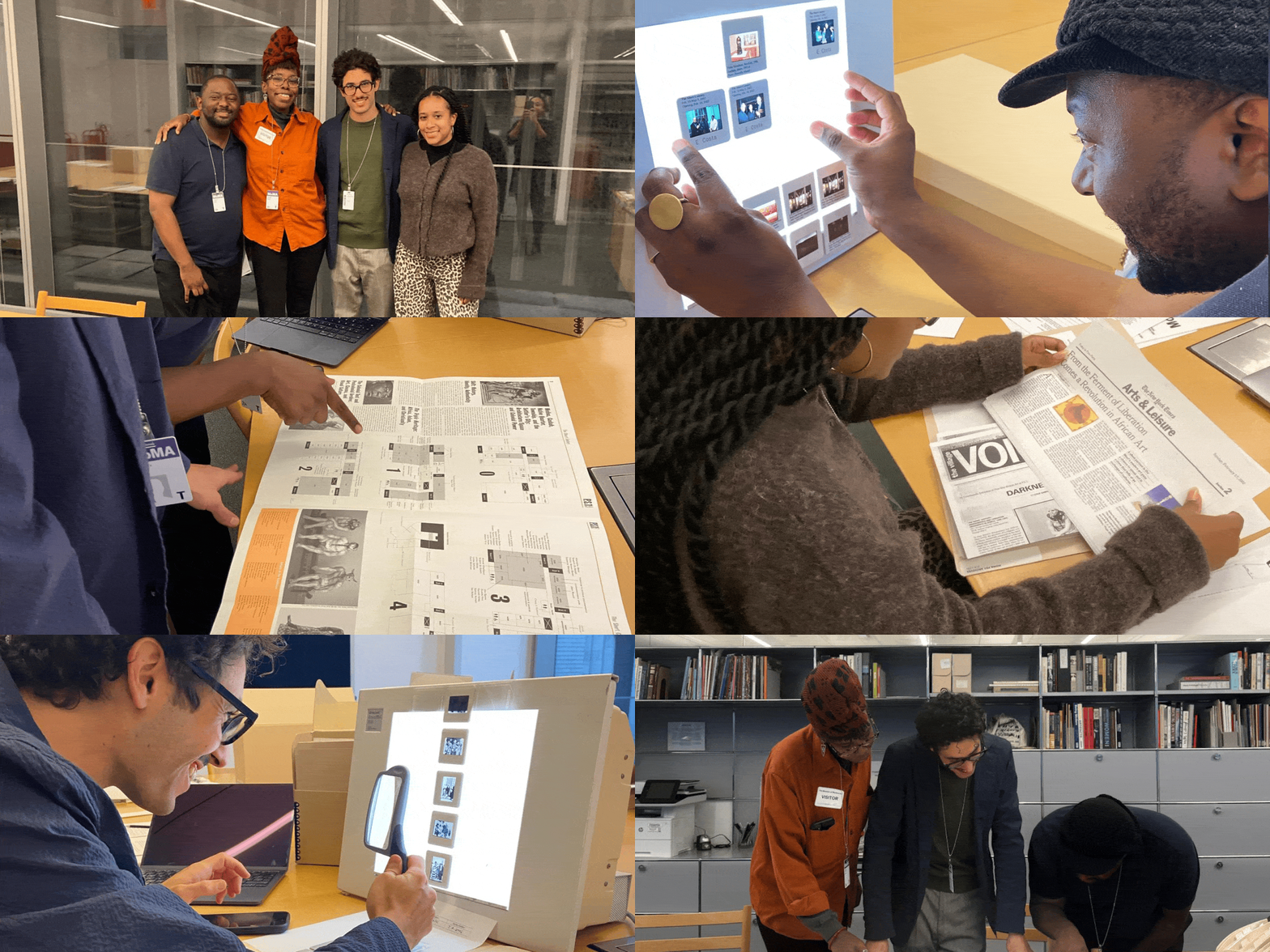 Visit to the MoMA Archives’ materials related The Short Century. Courtesy of Miatta Kawinzi, Najha Zigbi-Johnson, Pujan Karambeigi and Serubiri Moses.
The Short Century Intensive was generously supported by the Terra Foundation for American Art, and was led by Naima Hassan and Maryam Kazeem. Further reflections on the intensive will feature in Archive Futures, the digital publishing series accompanying the 2025–26 edition of the Re:assemblages programme.
