The March and April residencies at G.A.S. Foundation extended this trajectory of inquiry through a deepened engagement with research, ecology, and the expanded field of artistic practice. Across both Lagos and Ikiṣẹ, residents approached the programme as a site for sustained investigation, moving between archival work, field-based methodologies, and collaborative exchange. These months were particularly marked by an attentiveness to systems, whether ecological, urban, spiritual, or material, and to the ways knowledge is produced through immersion, dialogue, and iterative making. From explorations of coastal urbanism and participatory design to investigations into plant knowledge, healing practices, and cosmological frameworks, the residencies foregrounded process as much as outcome. In doing so, they reflect G.A.S. Foundation’s commitment to supporting practices that operate across disciplines and temporalities, where research and experimentation unfold in relation to lived environments, local expertise, and broader global conversations.
Adeoluwa Oluwajoba is a Lagos-based mixed-media artist whose practice combines painting, collage, and image-transfer processes to construct layered visual compositions of bodies and landscapes. Working across photographic and traditional printmaking techniques, he explores the mechanics of image reproduction and the ways meaning is assembled through fragments. Adeoluwa’s 3-week residency at G.A.S. Lagos ran from 9 March to 3 April 2026. During this period, he focused on experimenting with cyanotype printing on fabric, alongside conducting research at the G.A.S. Library and the Centre for Contemporary Art Library. His residency process involved moving through the city to gather images and observe public spaces, using these encounters to inform his ongoing body of work, Alice in a Daydream. The residency culminated in The Cyanotype Studio on 2 April 2026, a two-part programme comprising a hands-on cyanotype printing workshop and an open studio presentation. The session introduced participants to cyanotype as both a photographic technique and a drawing tool, guiding them through processes of image-making using both photographic negatives and hand-drawn forms, before inviting audiences into a presentation of works developed during the residency. Adeoluwa’s residency was generously supported by Deutsche Bank.
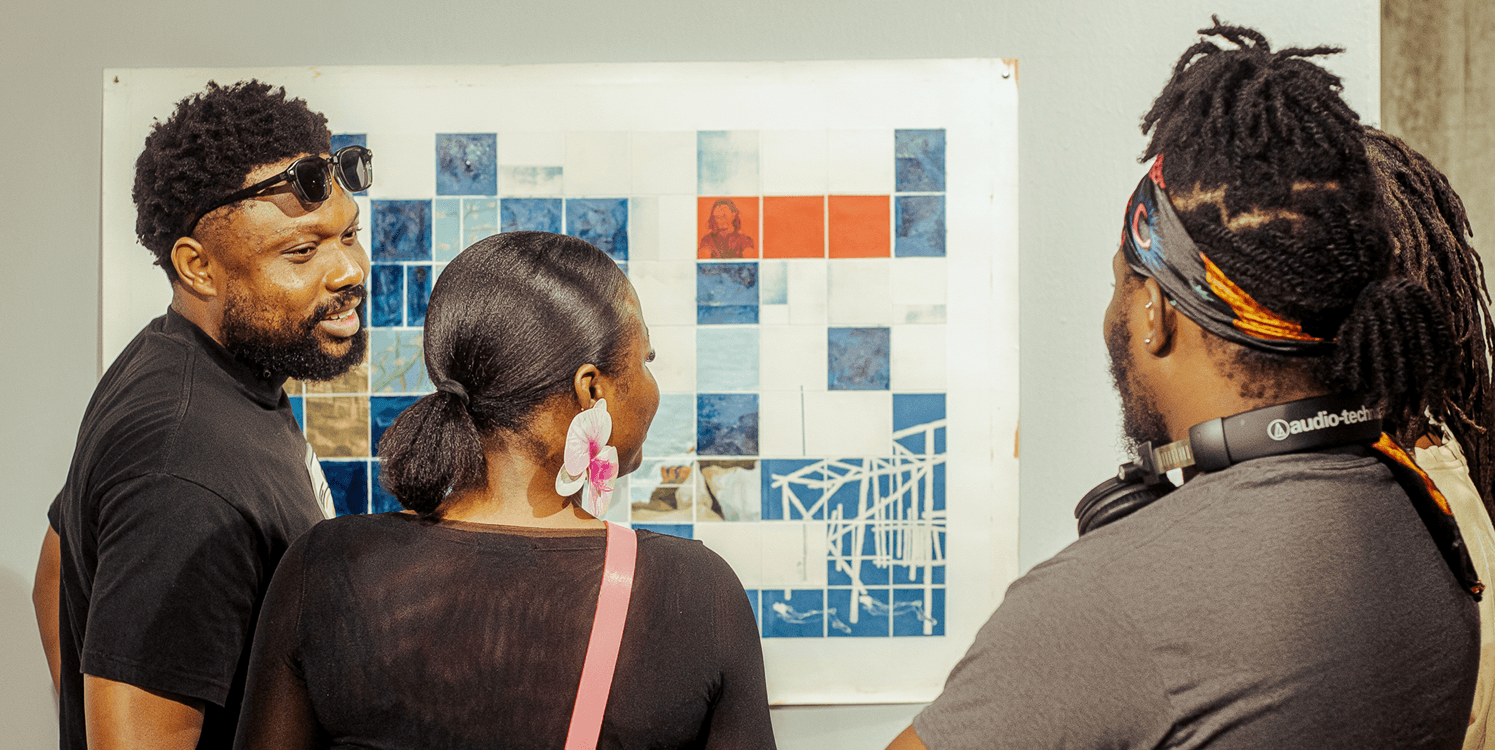
Attendees at Adeoluwa's The Cyanotype Studio on 2 April 2026
Okwei Odili is a Nigerian multidisciplinary artist and musician, whose practice spans music, research, and ecological inquiry. With a career rooted between Lagos and Salvador, Brazil, her work engages sound, storytelling, and cultural knowledge systems to explore themes of identity, healing, and transatlantic exchange. She gained international recognition following her collaboration with Brazilian musicians on the EP IFA Afrobeat + Okwei Odili, which won the Caymmi Music Award for Best New Revelation. Through subsequent projects, including her band Aweto and her solo album Òsùmàrè, her work continues to bridge Nigerian and Brazilian musical traditions while expanding into broader reflections on ecology, spirituality, and collective wellbeing. Okwei’s residency runs from 16 March to 24 April 2026, during which she is based at the G.A.S. Farm House in Ikiṣẹ. During this period, she is exploring traditional healing practices through the intersection of music and medicinal plants, drawing on both research and embodied engagement with the environment. Her residency involved connecting with herbalists, historians, musicians, and cultural practitioners, while also developing new musical and visual work centred on themes of ecological health, mental wellbeing, women’s empowerment, and sustainability. Okwei's residency is generously supported by G.A.S. Foundation.
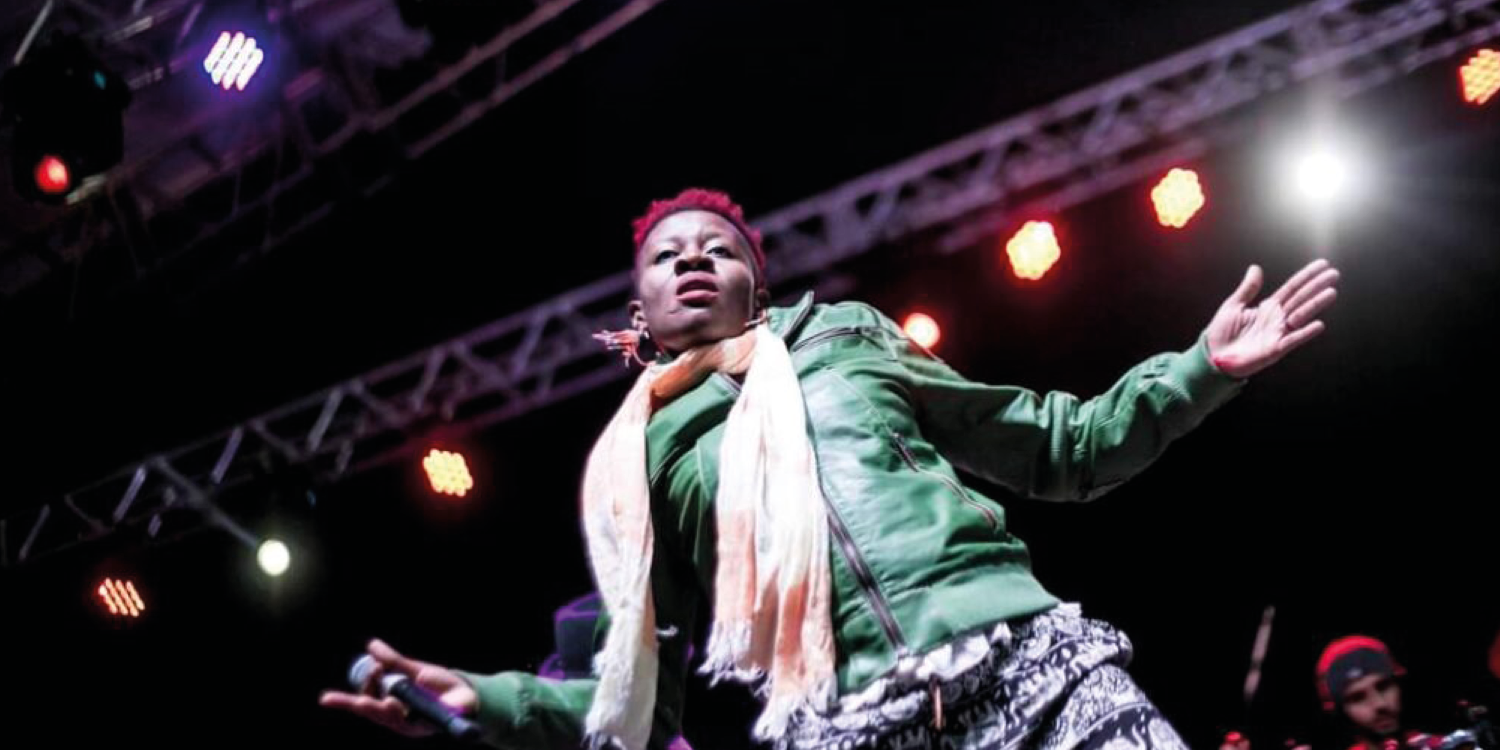 Okwei Odili performing at a festival. Image courtesy of afrikajump.
Kush Badhwar is a Helsinki-based filmmaker and researcher whose practice moves between film, artistic research, and urban studies. His work engages with counter-histories of large-scale development, particularly in relation to shifting relationships between land and water in urban peripheries. Working across moving image, sound, and archival inquiry, he approaches filmmaking as an extended process of being with places, tracing how ecological, political, and social transformations unfold over time. His recent projects have explored sites across India and Ghana, contributing to a broader interest in South–South connections and the entangled histories of urban change. Kush’s residency at G.A.S. Lagos runs from 6 April to 31 May 2026, spanning nearly eight weeks. During this period, he is focusing on researching Lagos as a coastal and riparian city, with particular attention to zones where water and land intersect. Through filming, sound recording, and archival research, he is developing new lines of inquiry into how urban development reshapes ecological and social relations. His approach prioritises observation, immersion, and exchange, seeking to build relationships with local practitioners, researchers, and communities while expanding his interdisciplinary methodology across film and urban research. The residency will culminate in Work Starts Now on 30 April 2026, a film screening and discussion presenting three of his short works: We in a 1 Room Kitchen (2013), Work Starts Now (2014), and Blood Earth (2013). Together, the films explore themes of labour, resistance, and everyday survival, moving across urban and rural contexts in India. The screening will be followed by a conversation reflecting on these themes and opening space for dialogue with audiences.
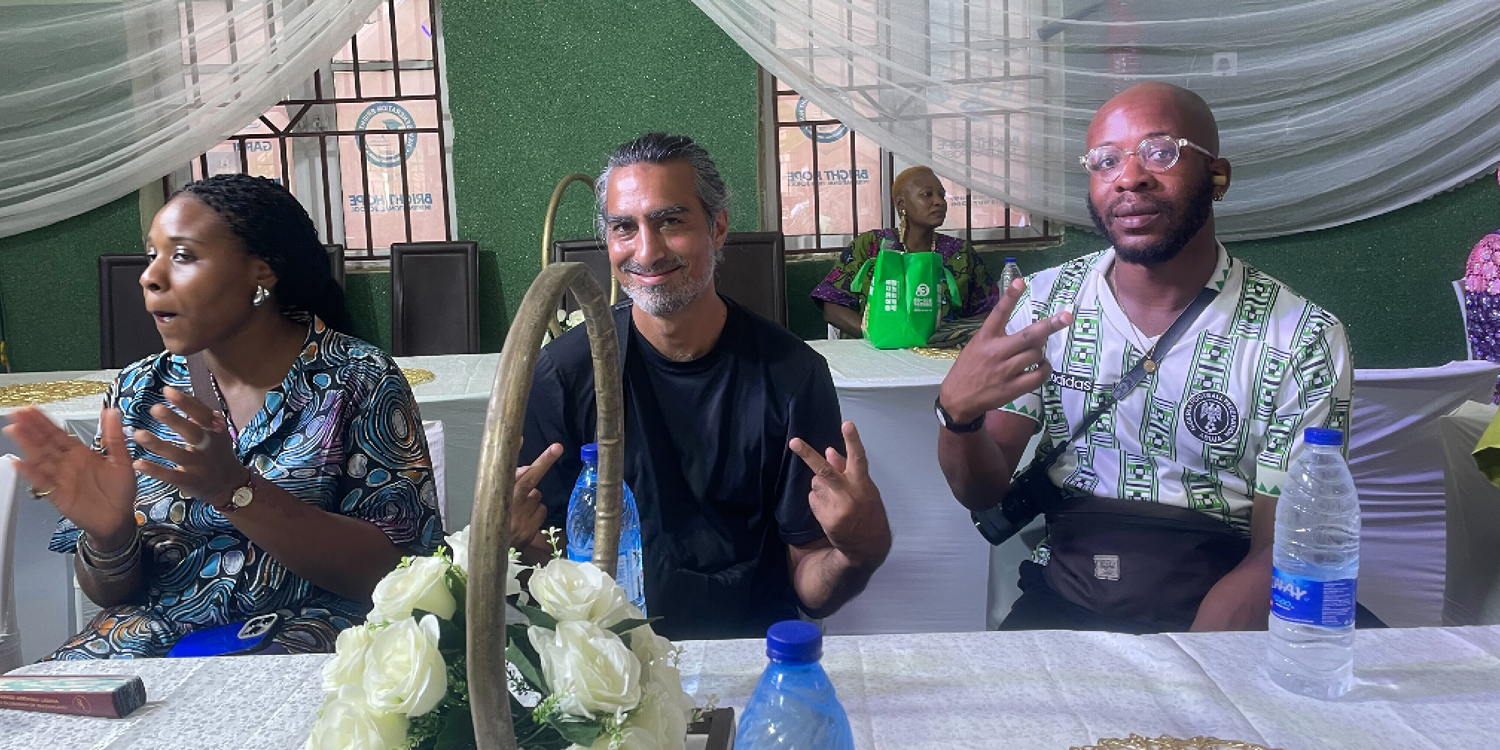
Lukman, Semilore, and Kush at a local Ogun festival in Oshogbo
Lukman Ipese is a London-based British-Nigerian graphic designer and visual communicator whose practice centres participatory design, storytelling, and the social life of images. Working across editorial design, photography, and workshops, he explores how identity, belief, and culture shape visual communication, often drawing on his diasporic experience to examine Nigerian identity from both within and across contexts. His work foregrounds collaboration as method, positioning design as a shared process of exchange, authorship, and care. His residency at G.A.S. Lagos runs from 6 April to 1 May 2026, spanning just under four weeks. During this period, he is undertaking field research and photographic documentation exploring how spirituality manifests in everyday visual culture across Lagos, particularly within areas such as Surulere. His approach combines image-making with participatory methods, gathering stories, community responses, and visual references that will inform the development of a collaborative photobook and future publications. Alongside this, he is facilitating workshops and exchanges that invite artists, students, and community members to contribute to the project, while also introducing accessible tools for visual storytelling and self-publishing. The residency culminated in Kitted for Culture on 29 April 2026, a presentation and zine-making workshop that reflects Lukman’s broader practice. The session will explore themes of identity, belief, and cultural expression through graphic design, with particular attention to football, fashion, and the football shirt as a cultural artefact. This will be followed by a hands-on workshop introducing participants to DIY publishing techniques, encouraging them to translate personal narratives into self-produced zines through collage, drawing, and writing.
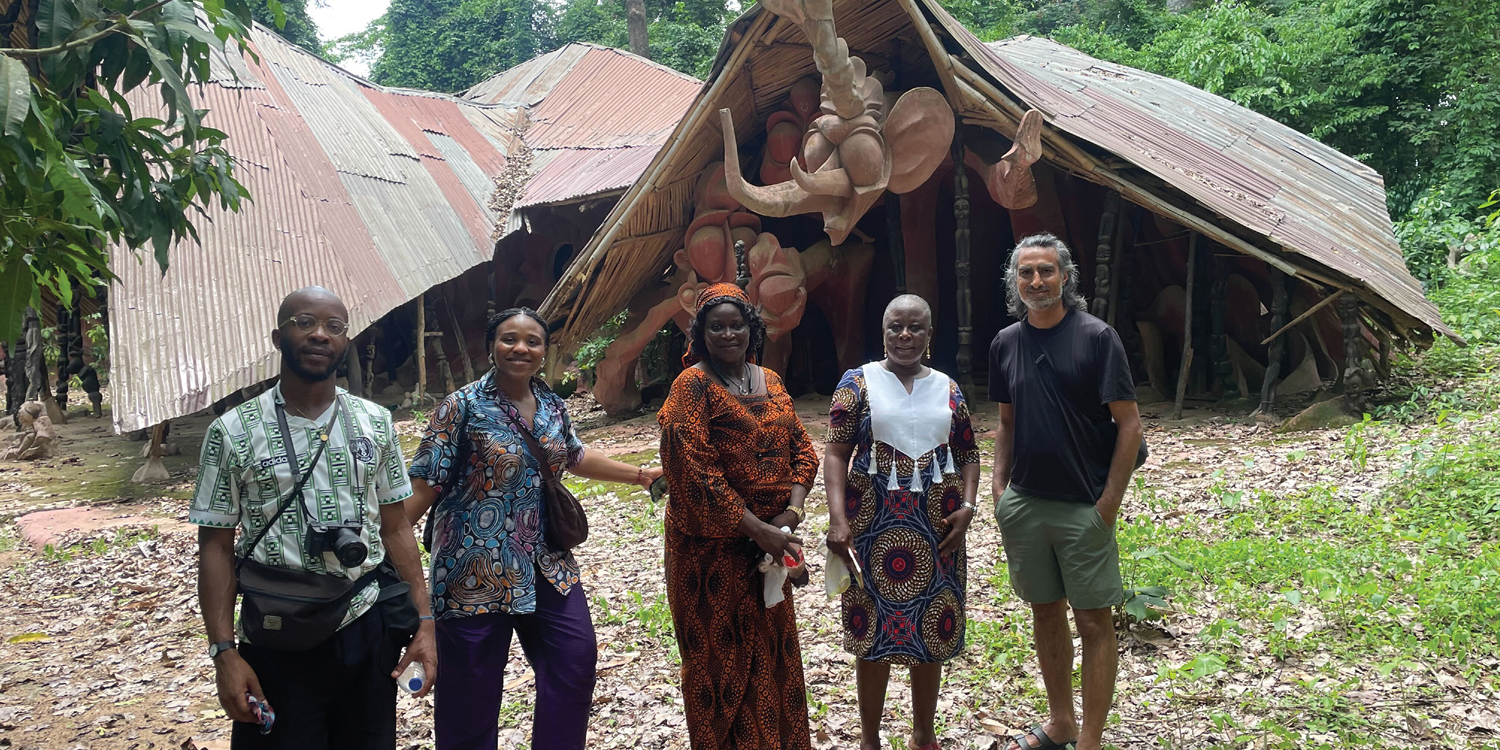
Lukman, Semilore, and Kush with their tour guides on the site of the second palace of the Ataoja of Oshogbo, at the Osun Oshogbo Sacred Grove.
Oluwasemilore Delano is a London and Lagos-based artist whose practice spans drawing, painting, and sculpture, engaging deeply with questions of memory, lineage, and Black spatial consciousness. Originally from Ogun State, Nigeria, her work interrogates the figure not simply as form but as a site of perception shaped by material histories and embodied knowledge. Working with charcoal, concrete, oil, and textured black surfaces, she explores the tensions between abstraction and figuration, often foregrounding instinct, surface, and the residue of labour. Delano studied at the Royal Drawing School before completing a BA in Architecture at the University of Cambridge and an MFA at the Ruskin School of Art, University of Oxford, where she was supported by the Black Academic Futures and Penny Freer Scholarships. Delano’s residency at G.A.S. Lagos spanned approximately six weeks, from 13 April to 22 May 2026. During this period, she undertook an intensive programme of conceptual research and material experimentation, centring on funeral and death rituals and the notion of return within Yoruba cosmologies. Drawing from her great grandfather I. O. Delano’s writings, particularly The Soul of Nigeria, she explored themes of ancestry, afterlife, and diasporic identity. Alongside this, she developed her material practice through experiments with concrete, jesmonite, metal, and wood, with a particular focus on traditional cooking vessels such as Ikoko Irin. Her residency included visits to artisan workshops, markets, and cultural sites, as well as time spent at the G.A.S. Farm House, allowing her to respond to shifts in landscape and material context while maintaining an active studio practice in painting and sculptural production. The residency culminated in an open studio and research sharing at G.A.S. Lagos, where Delano presented the conceptual and material developments that emerged from her engagement with Yoruba cosmology, archival research, and hands-on experimentation with industrial and traditional materials. Oluwasemilore’s residency is generously supported by Adegbola Art Gallery.
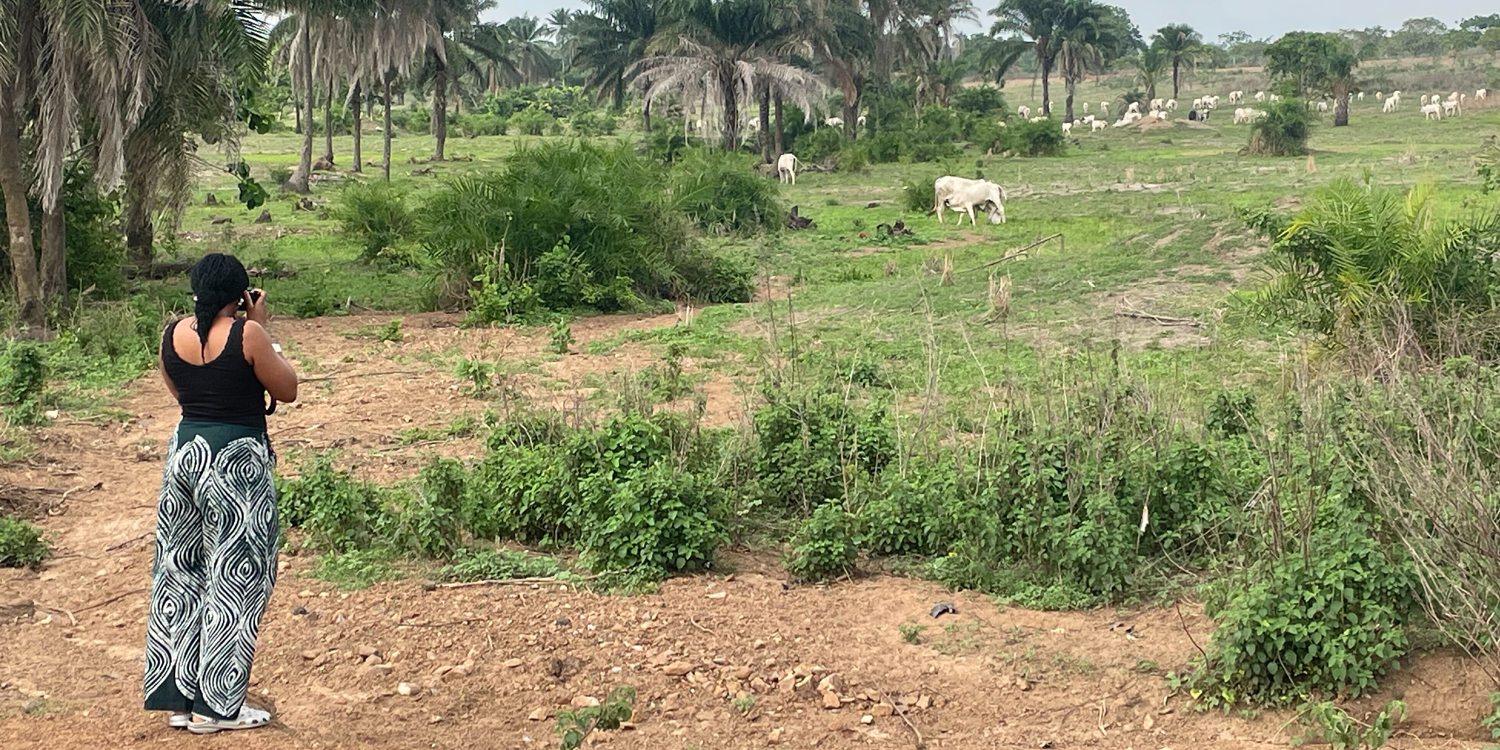
Semilore photographing cows on the way to Saki as part of her parallel research into nomadic lifestyles in Nigeria