Last week, we welcomed Jonathan Chambalin, a multidisciplinary artist, photographer, and researcher, to G.A.S. Lagos as a recipient of the G.A.S. Fellowship Award 2026. Based in Lagos, Jonathan works across installation, cinemagraphs, sound art, painting, photography, and kinetic sculpture. His practice explores how everyday Nigerian materials and craft processes can be transformed into works that examine social, cultural, and environmental relationships, with a focus on labour and sustainability.
While at G.A.S., Jonathan will use the residency as both a laboratory for making and a space for collective exchange. He plans to further develop Food to Power, a project investigating how agricultural by-products such as ewedu stalks can be transformed into small-scale kinetic energy systems. He is particularly interested in exploring the relationship between farming cycles, craft knowledge, and decentralised power generation within Nigerian contexts. Jonathan will engage directly with farming communities connected to ewedu cultivation, including revisiting farms behind Lagos State University (LASU) and local markets, while also visiting the G.A.S. Farm House in Ikise to better understand jute cultivation and plant maturation cycles. Alongside this field research, he will collaborate with local weavers and repair craftspeople to prototype woven jute propellers capable of generating light, examining how visible labour reshapes our relationship to energy and responsibility.
Jonathan's residency is generously supported by Deutsche Bank. To find out more about supporting G.A.S. Foundation, click here.
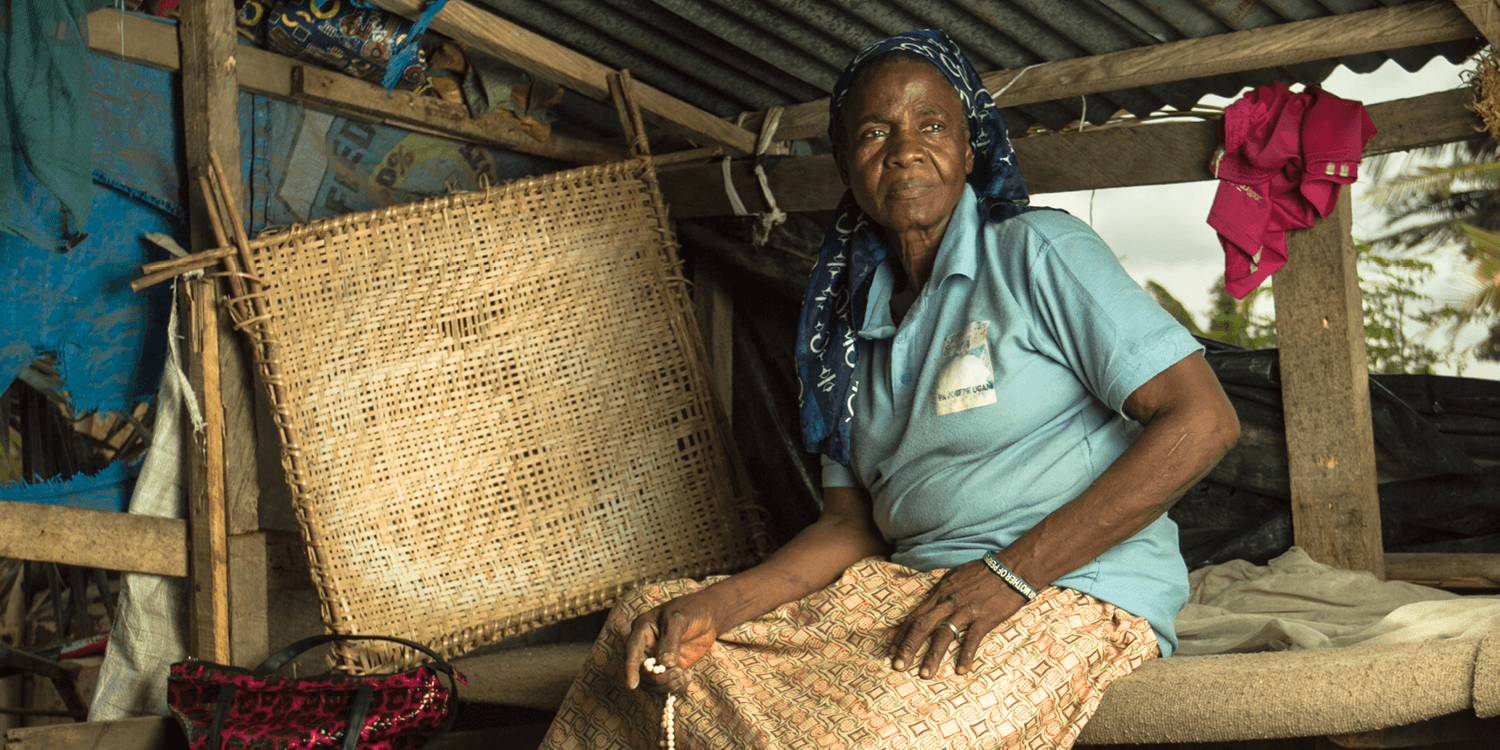 Mama Theresa in Her Farm Shade, from the series NEW ROUTES: VEGETABLES TO IYANOBA. Photography. 2018. Image courtesy of Jonathan Chambalin and Ogungbe Ayobami.
What is the current focus of your creative practice?
My current creative focus centers on material experimentation, speculative infrastructure, and symbolic forms drawn from everyday Nigerian life. I am interested in how ordinary materials such as agricultural by-products, found mechanical systems, and locally embedded craft processes can be transformed into sculptural works that question power, labor, and collective responsibility. I am currently developing Food to Power, a project that explores decentralized energy generation using woven plant fibers derived from ewedu stalks.
Through small-scale kinetic installations capable of powering a single bulb, I investigate what it means to generate light one unit at a time and how the visibility of effort can reshape our relationship to energy consumption. Alongside this, I am deeply interested in the cactus form as a tool for world-building and as a quiet personification of the Nigerian experience. The cactus embodies endurance, adaptation, and the ability to store life within harsh conditions. In my work, it becomes both landscape and character, symbolizing resilience, guarded vulnerability, and survival within unstable environments. Across photography, installation, and sound, I move between documentation and construction, building systems and symbols that reflect how culture adapts, survives, and reimagines itself.
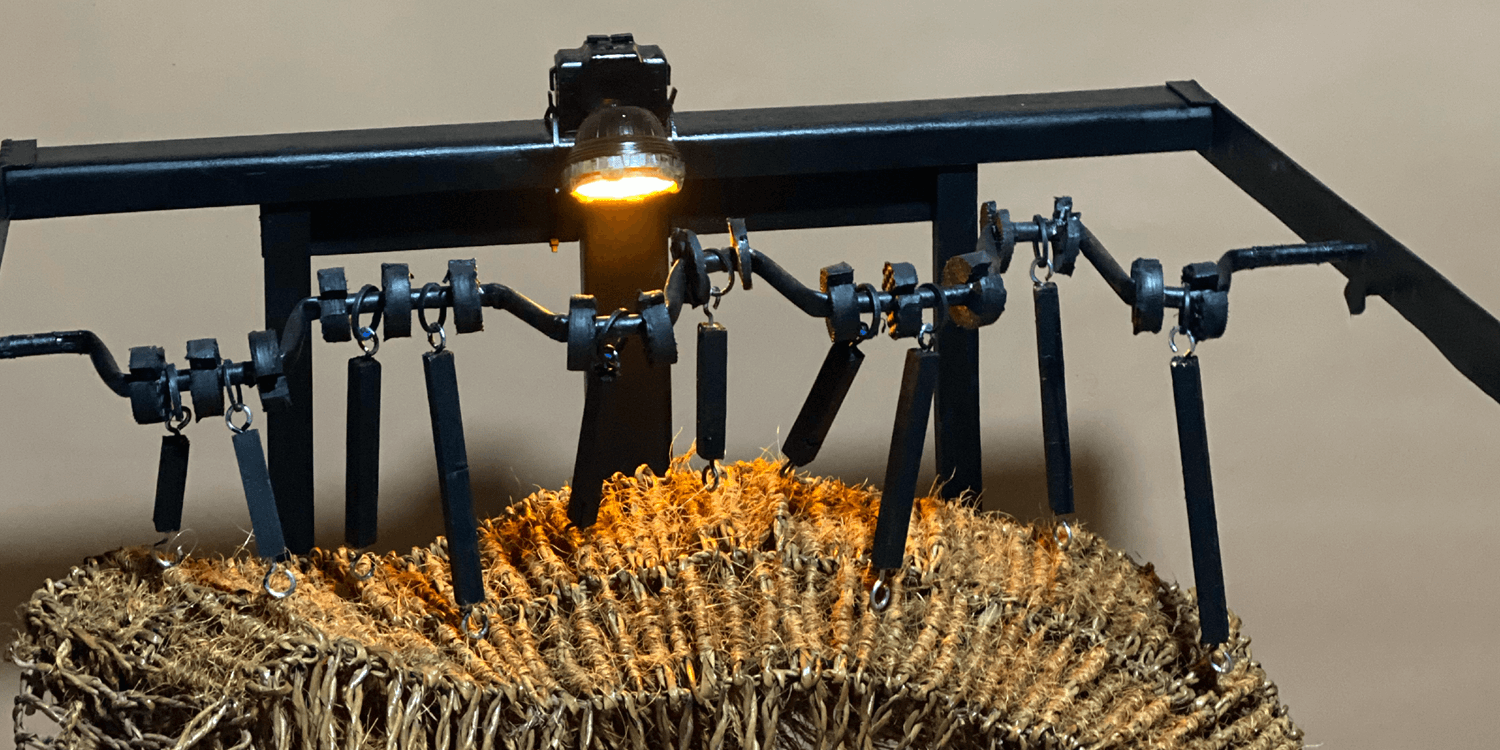 Egwu Esu. Jute, aged coconut husk, iron tube, wooden handle, Styrofoam, detachable self-powered lighting. 20.5 × 40 × 17.5 in. 2021-2025. Image courtesy of Jonathan Chambalin.
What drew you to apply for this residency and how do you think it will inform your wider practice?
I was drawn to this residency for its focus on material inquiry, research-driven practice, and grounding within the Nigerian context. It offers a rare space where experimentation, agriculture, craft, and critical discourse can coexist without the pressure of immediate production, aligning closely with the direction my work is taking. My practice increasingly explores how local materials and lived realities inform speculative systems, and projects like Food to Power require time for field engagement, testing, and reflection. The residency also provides the opportunity for dialogue with peers, mentors, and the informal labour and craft systems, allowing my ideas to be challenged, sharpened, and situated within broader conversations around sustainability, identity, and infrastructure. I believe this experience will deepen the rigor of my practice, helping me move from intuition to clearly articulated systems and expanding the scale and clarity of the worlds I build through sculpture, photography, and research.
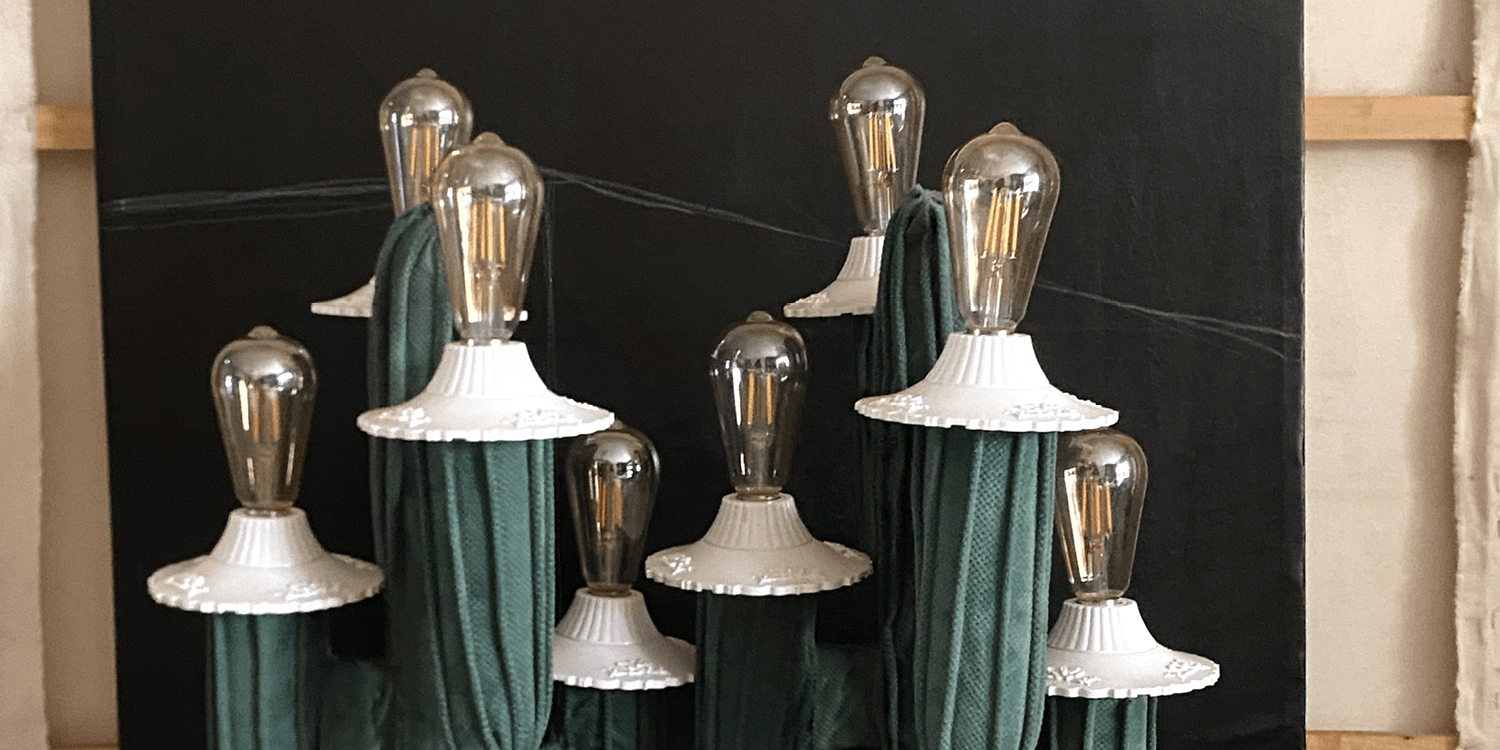 Catcus Forest, 2025. Image courtesy of Jonathan Chambalin.
Can you give us an insight into how you hope to use the opportunity?
I hope to use this residency for deep focus and intentional experimentation. While my practice often begins with observation and documentation, it is increasingly about building functional, symbolic systems that respond to lived realities. Food to Power will allow me to refine materials, experiment with scale, and explore how agricultural by-products and simple mechanical devices can become sculptural tools for rethinking energy and responsibility. I also aim to expand research on the cactus form as a world-building device, translating resilience and adaptation from metaphor into constructed environments. Equally, I want to engage with farmers, students, peers, and mentors, letting the work evolve through dialogue rather than isolation. I see the residency as both a laboratory and a meeting point, aiming to leave with clearer systems, stronger prototypes, and a grounded articulation of how my practice contributes to conversations around material culture, infrastructure, and collective futures.
RESIDENCY ARCHIVE
Event: One Bulb At A Time
Event Date: 6th March 2026
On 6th March 2026, G.A.S. Lagos hosted One Bulb at a Time, a presentation exploring how agricultural innovation can respond to the unique challenges of the Lagos landscape. Led by Jonathan Chambalin in collaboration with Lagos Gallery Weekend, the session brought together practitioners across craft, farming, and technology, including Edward Ogani a local farmer, and G.A.S. alumnus Ryan Tenney, an agro technologists whose work foregrounds Pan-African approaches to communal development.
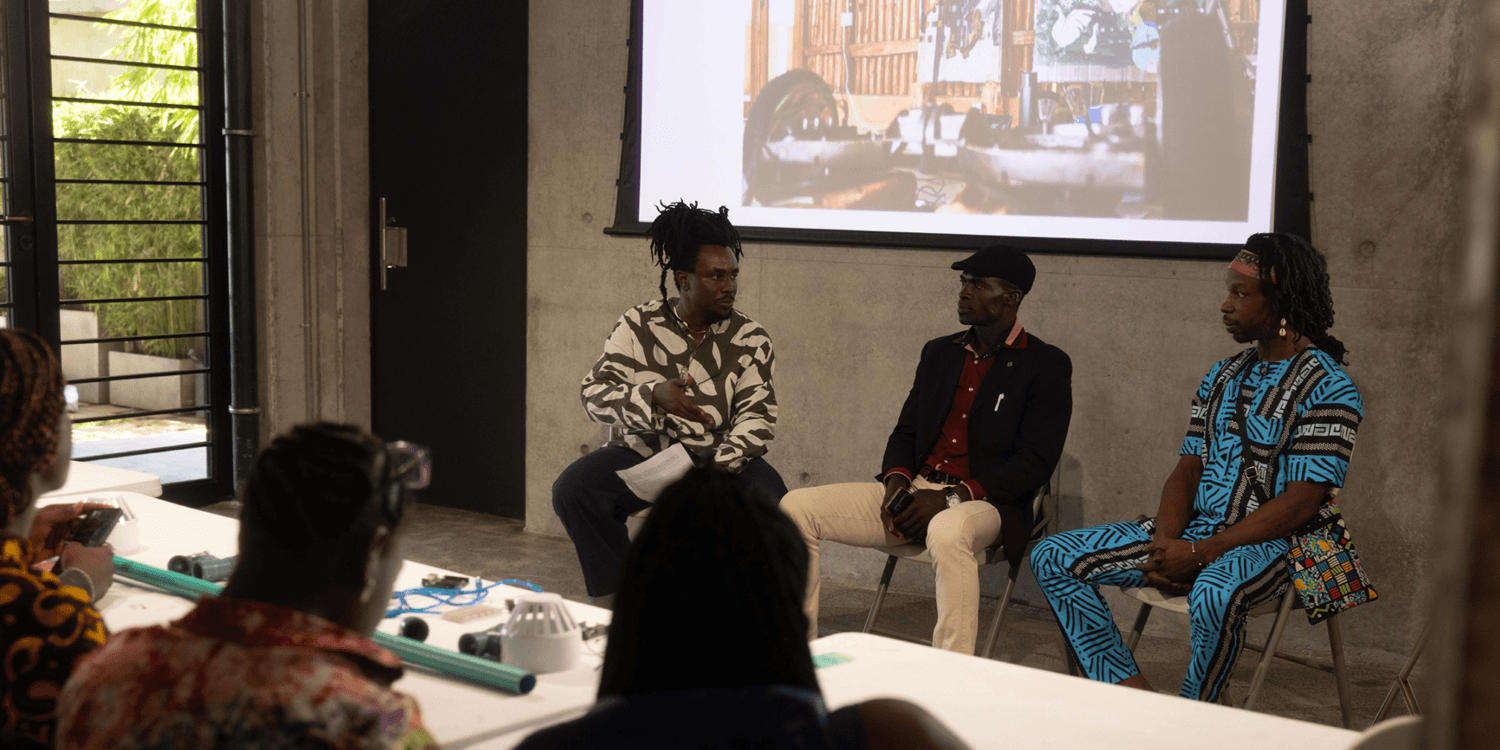 Jonathan Chambalin in converation with Ryan Tenney and Edward Ogani at One Bulb At A Time at G.A.S. Lagos.
About Jonathan Chambalin
Jonathan Chinedu Chambalin is a multidisciplinary artist based in Lagos, Nigeria. Born on February 16, 1995, and originally from Imo State, he works across full-scale installation, cinemagraphs, sound art, painting, photography, and kinetic sculpture. He holds a Bachelor of Arts in Performing Arts and Mass Communication from the University of Benin and trained in photogrammetry with the Factum Foundation 2023, contributing to digital preservation work with MOWAA 2025. Chambalin was a grantee and exhibiting artist for the Re Entanglements project with the University of London and the Cambridge Museum and participated in Rele Young Contemporaries in 2020. He has been featured by Elephant Magazine UK, BBC World Service and shown by African Artist Foundation, Art Joburg, Kunst Museum Bonn, & University of Bayreuth. In 2025, he presented his first solo exhibition, Umuneji Flamingo at Adegbola gallery , in Lagos. He is shortlisted for the 2026 Intercontinental Biennale in Panama.
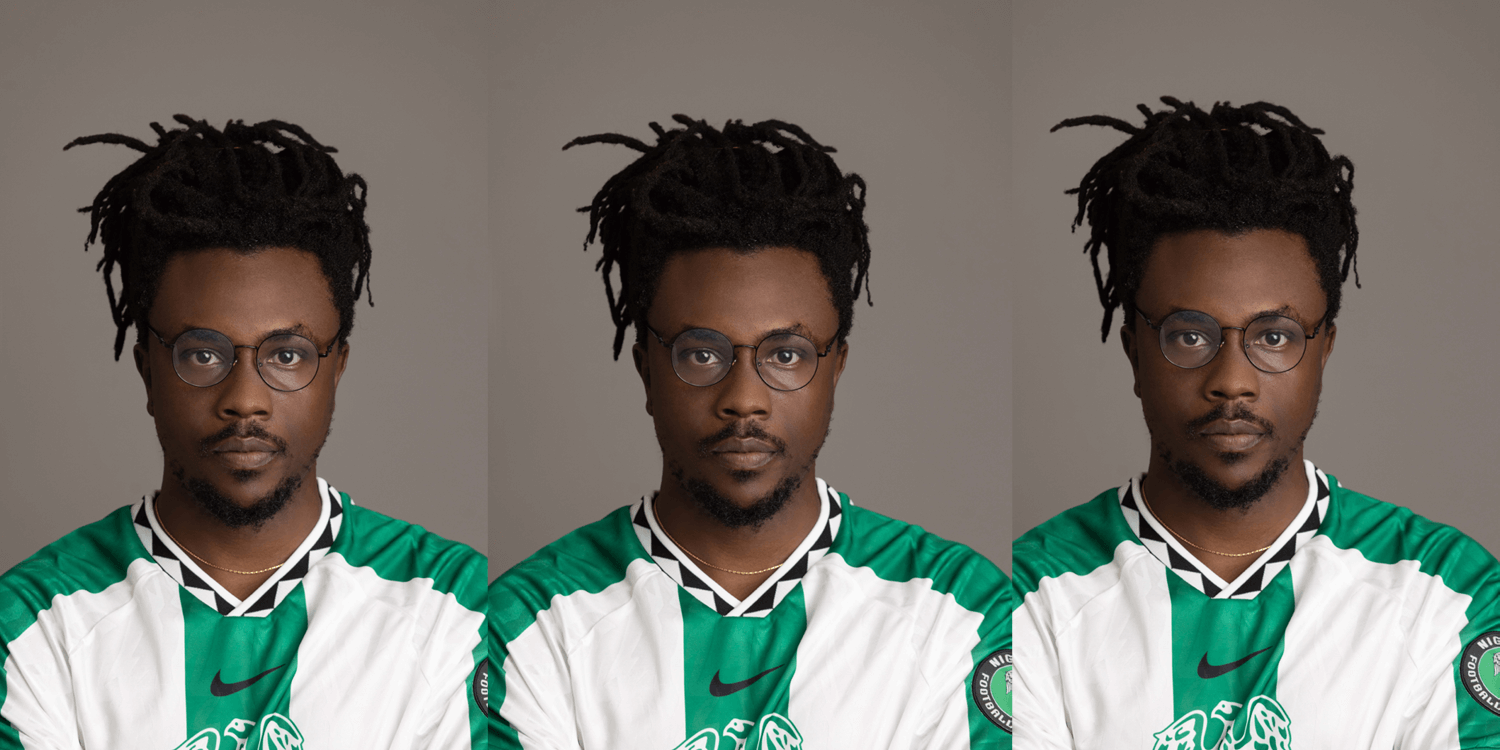 Photo of Jonathan Chambalin. Image courtesy of Timothy Onuchukwu.
Jonathan's residency is generously supported by Deutsche Bank.
